Ever notice how the best traders seem to make perfect moves every time? The VWAP trading strategy (volume weighted average price, a tool that calculates an average by combining prices with trade amounts) helps show exactly where the market stands during the day.
This simple yet sharp method gives you a clear edge when the right moment comes up for a trade. Stick with us, and you'll soon see why so many traders see this strategy as a game changer.
VWAP Trading Strategy Fundamentals and Calculation
VWAP stands for Volume-Weighted Average Price (a simple way to show an average price per share weighted by the total trading volume). In simple terms, you take each trade’s price, multiply it by the number of shares traded, and then divide that total by the overall volume of shares that were traded. It’s like adding up all the money spent on a stock and dividing it by how many shares changed hands, giving you a clear picture of the day’s average price.
When a security is trading above VWAP, it usually means buyers are taking charge, and the market feels upbeat. On the flip side, if it’s below VWAP, sellers have the edge, hinting at a more cautious or even bearish mood. Imagine seeing a stock price jump above VWAP while the volume kicks up, like catching a wave at just the right moment. That’s when the market’s energy really shows.
Keep in mind that VWAP resets every day, so it works best on charts that cover just one day’s trading. Unlike moving averages that only look at price, VWAP also factors in how much is being traded. This mix of price and volume helps you understand market movements in a much richer way.
Pro traders rely on VWAP to feel out the market’s mood and to help guide large orders without causing big shifts in prices. They use it as a benchmark to check if a trade is a good deal compared to the average price of the day. It’s a dynamic tool that helps them decide the perfect moments to enter or exit a trade.
Setting Up an Intraday VWAP Trading System

Begin by building a solid day trading VWAP system. First, choose a 1- to 5-minute chart so you can quickly see price changes along with volume data. Then add the VWAP indicator (which is a tool that shows the average price based on volume) on your trading platform, like TradingView. I remember a tip someone shared: "Open your chart, tap on indicators, and search for VWAP. It’s like having a compass that shows you the market direction."
After the market opens, watch how the VWAP line moves. When the price stays above the VWAP, it means buyers are in control. If it drops below, sellers are leading the way. Confirm your trade when the price crosses the VWAP with a clear burst of volume. It’s like catching that perfect moment when the tide lifts a boat.
Plan your exit too. Exit your trade when the price returns to the VWAP or hits a preset target level. Here’s an easy step-by-step guide:
- Pick a 1- to 5-minute chart for quick insights.
- Add the VWAP indicator on your trading platform.
- Watch the VWAP line after the market opens.
- Note whether the price stays above or falls below the VWAP to determine buyer or seller strength.
- Enter a trade when the price crosses the VWAP and volume spikes.
- Exit when the price returns to the VWAP or reaches your target deviation.
This setup helps you catch trading opportunities during fast intraday moves while keeping your strategy clear and simple.
VWAP Trading Strategy Wins for Savvy Traders
Anchored VWAP lets you choose a starting point, like when a company drops its earnings report, to track the average price from that moment on. Imagine setting an anchor at a big price swing. It creates a clear line of support or resistance, so you can decide when a market move might be strong enough for a trade. It’s like drawing a starting line right when runners burst off the blocks.
VWAP Percentage Bands take it even further by adding extra lines around the VWAP. These bands, usually set at ±1% or ±2%, show you when the market feels a bit extreme. For example, big companies might reverse when the deviation is about 2%, while smaller ones might turn around at 1.5% or 1%. A trader might think, "When I see a stock hitting a band, it’s time to watch for a reversal." This extra signal is a handy tip for spotting overbought or oversold situations.
Continuous Re-Anchoring keeps the VWAP fresh by updating it with each new swing high or low. This means your starting point is always current as market conditions change. Imagine your chart adjusting with every key tick, it’s like having a self-refreshing view of the market.
| Method | Description | Primary Benefit |
|---|---|---|
| Anchored VWAP | VWAP set from a specific event such as an earnings release | Creates a strong line for support or resistance |
| Percentage Bands | Deviation bands around the VWAP line | Highlights potential overbought or oversold zones |
| Continuous Re-Anchoring | VWAP auto-updates with new market swings | Keeps your analysis up-to-date |
All these methods together give you a sharper edge when deciding when to enter or exit positions during important market shifts. Ever felt that rush when you catch a clear trend? This approach can help guide you in day trading and keeping pace with the market’s pulse.
Combining VWAP with Other Technical Indicators

VWAP is like a flexible marker that traders use to see where support and resistance lie. When a stock is trading above VWAP, it shows buyers are in control. When it falls below, sellers hold sway. Many traders blend VWAP with moving averages such as the simple (SMA) or exponential moving average (EMA, a type of average that gives more weight to recent prices) to cut down on false signals. For example, a crossover between the SMA and VWAP might hint that market conditions are starting to shift, almost like giving a second look to your gut feeling.
Mix in the Relative Strength Index (RSI, a tool that measures how fast prices are changing) and you get another layer of confirmation. If a stock’s price is above VWAP and the RSI is over 50, it usually supports a move to buy. It feels like both price action and momentum are giving you the green light. Likewise, pairing VWAP with the Moving Average Convergence Divergence (MACD, a trend-following momentum indicator) can be a smart play. Often, the MACD histogram follows the slope of VWAP. This can signal whether momentum is weakening or boosting. One trader even said it felt like watching two dance partners moving perfectly in sync when the MACD and VWAP aligned.
For a deeper dive into these ideas, you might want to explore more on technical analysis and see practical examples that back up the VWAP strategy.
Backtesting VWAP Strategies and Evaluating Performance
When you’re trying out a VWAP strategy, using past intraday data is a must. Backtesting shows you how your system might have done during real market moves. It helps you play out moments when a stock pushes above VWAP (a key price level) or dips back to it before moving up. Using platforms with built-in backtesting features makes this task feel a bit more like watching live market action.
Keep a close eye on a few important numbers. For example:
- win rate (the percent of trades that worked out well)
- profit factor (the relationship between total gains and total losses)
- max drawdown (the biggest dip from a high point)
- average trade result (the typical profit or loss per trade)
These figures tell you if your strategy is strong enough to handle different market swings.
Then, test your system on data it hasn’t seen before, a process known as out-of-sample testing. Think of it as a final check to see if your rules for VWAP still work when conditions change. Try adjusting your rules after these tests, and you’ll be all set to trade with a bit more confidence.
Implementing Risk Management with VWAP
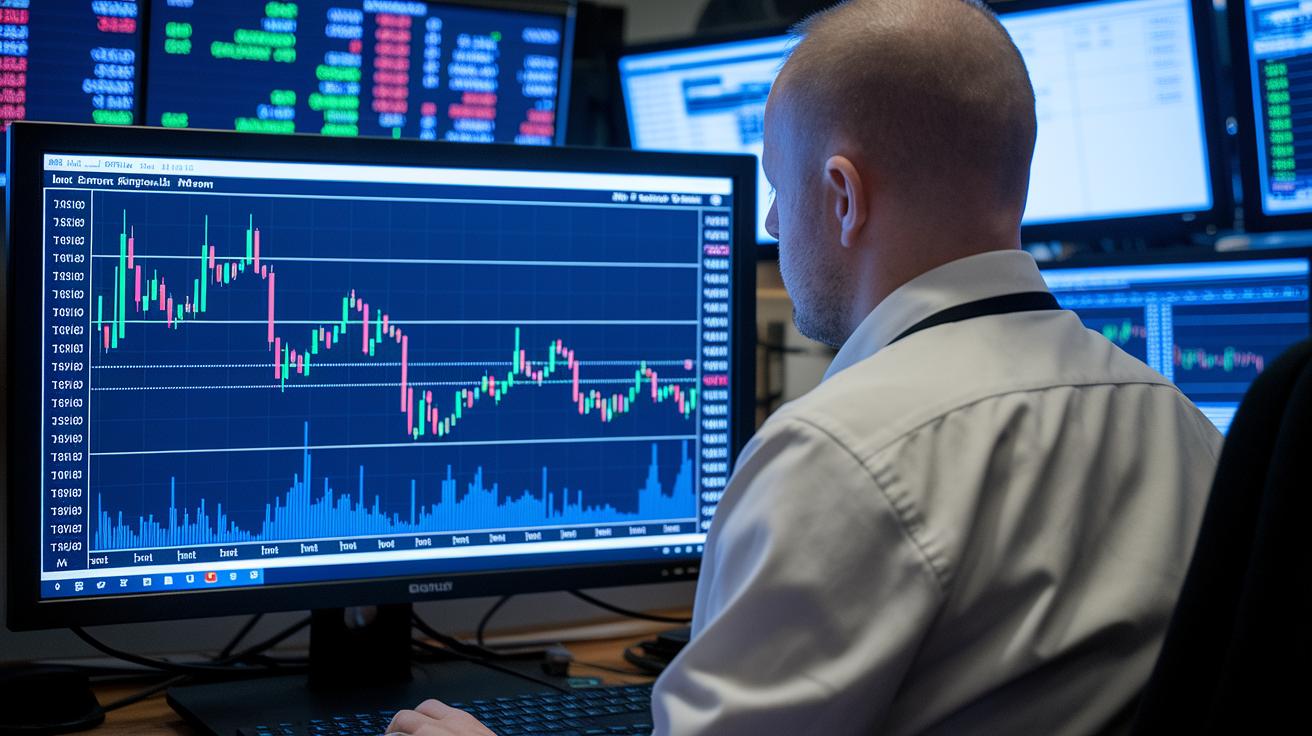
VWAP can be a handy tool when market swings come at you fast. Think of it as a flexible safety net that moves with the market. For example, some traders might choose to close long trades if the price dips below VWAP. This method works like a stop-loss that adjusts with every market twist, quickly helping to limit losses when trends shift.
You can also decide how much to trade by checking how far the price is from VWAP. The greater the gap, the more careful you might want to be with your position size. This strategy keeps things in check, so if the market turns, your losses stay small.
Some traders like to get extra confirmation before acting on a VWAP signal. They add more tools to help filter out the noise, especially during slow trading periods. By linking VWAP to important market events, they can test risk scenarios and see if volatility might spike, giving them a chance to rethink their trade.
- Let VWAP trigger your stop-loss orders.
- Change your trade size depending on how far the price strays from VWAP.
- Look for extra signs to confirm a VWAP signal before fully committing.
VWAP Trading Strategy Wins for Savvy Traders
Imagine watching a famous stock like GOOGL make a big move. On the day of an antitrust decision, its price pushed above the VWAP right at market open, and traders noticed a strong 20% jump in volume. They jumped in as soon as the price crossed the VWAP line. One tip I like is: "Enter at the VWAP cross when extra volume shows up – think of it as spotting a rocket launch." The position was held until the price hit a +1.5% move away from VWAP, signaling time to exit. It’s a clear setup that shows how VWAP and volume hints help you catch potential market moves.
Now, picture NVDA after its earnings report. The numbers were a bit off – EPS came in at $1.05 versus $1.01 and revenue at $46.74B versus $46.02B – and the stock pulled back to its VWAP. At that moment, a bullish reversal candle appeared right at the VWAP line, inviting traders back into the action. With the market winding down, traders planned their exit as the price went near the VWAP, ensuring they secured their gains before any sudden shifts. Another tip: "When you see a pullback to VWAP with a bullish reversal, it might be time to re-enter."
- Breakout Scenario: GOOGL crossing VWAP with a 20% volume spike
- Pullback Scenario: NVDA retracing to VWAP after an earnings miss
These real-world examples show how using VWAP signals along with volume clues and clear exit points can lead to smart, disciplined trading decisions.
Final Words
in the action, we broke down the process of mastering a vwap trading strategy. We covered basics like VWAP calculation (total dollar amount of trades divided by total volume) and setting up intraday systems, then moved into advanced methods such as anchored VWAP and deviation bands. We also explored how combining VWAP with other indicators and careful backtesting can sharpen your entries and exits, while risk controls keep trades in check. Every step was meant to boost your confidence and skill. Keep testing and refining, good trades lie ahead.