Ever wondered if a few key numbers could uncover secret market trends? Market pulse metrics give you a quick look at live price swings, trade volumes, and investor feelings (how people feel about the market) all in real time.
This means you can spot shifts as they happen. When you catch them early, traders and analysts can act fast. In this article, we explain how these clear numbers help you find opportunities and adjust your strategy with confidence. Get ready to see how simple data turns into smart trend signals.
Comprehensive Market Pulse Metrics Defined
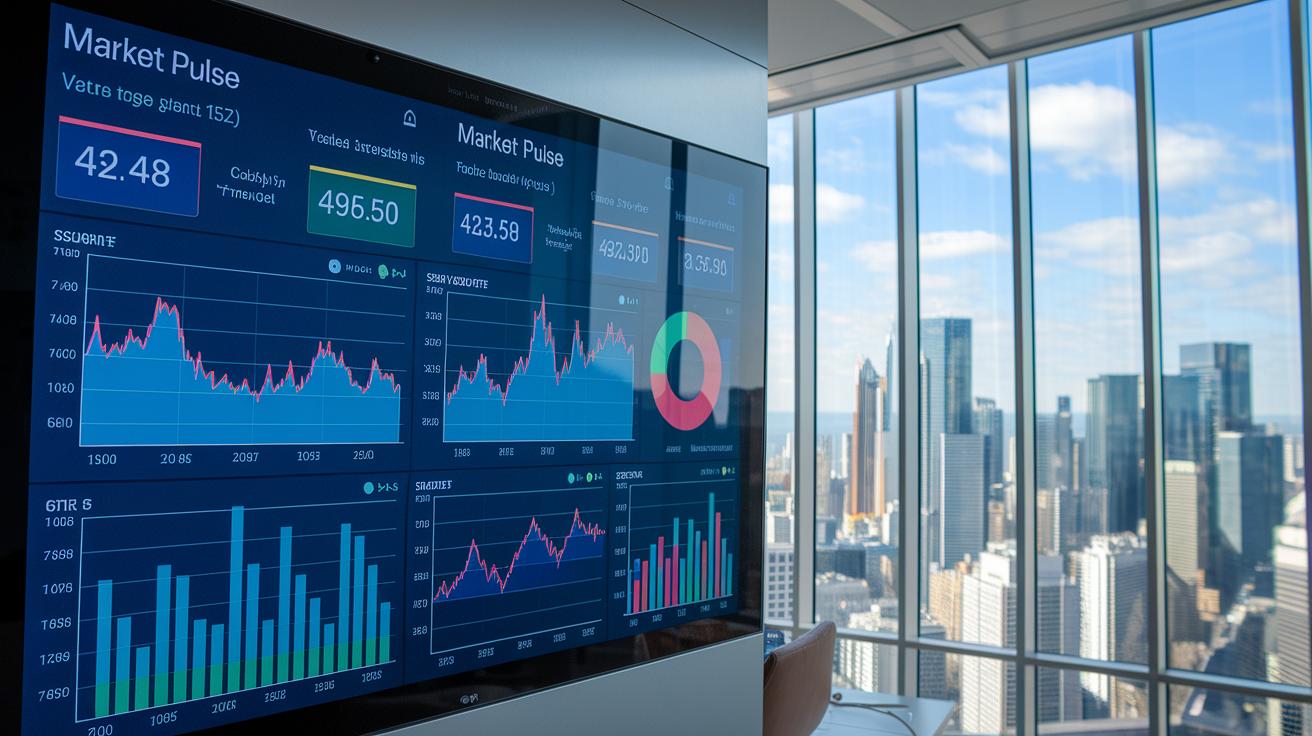
Market pulse metrics are like quick snapshots that show what’s happening in the market right now. They track live changes in prices, how many trades are happening, how easily assets can be bought or sold (liquidity), and even the general feeling or mood of investors. Unlike older methods that use past data or daily recaps, these metrics update almost instantly so you can see trends as they start.
Having real-time data is a game changer for traders, analysts, and even policymakers who need to react quickly. When the market shifts suddenly, this fresh info lets you make fast decisions and adjust your strategy on the fly. Traders can spot short-term chances or risks, while analysts pick up on patterns that hint at future trends. And for policymakers, it means understanding market pressures in the moment, which can help guide better regulations.
Take Bitcoin as an example. Nearly 94% of its supply is showing a profit, and the net unrealized profit/loss (NUPL, which tells you how much profit would be made if all assets were sold) is flirting with a high level around 0.75. Plus, the Realized Profit/Loss ratio sits at 2.38, suggesting that taking profits is very appealing in this high-risk, high-reward scene. This kind of detailed, real-time insight shows just how powerful market pulse metrics can be, revealing market moods that traditional numbers might overlook.
Core Components of Market Pulse Metrics

Breaking down market data into clear, separate groups makes understanding much easier. When we sort information this way, it’s simple to spot what’s really pushing the market. It helps us see those key drivers in real time.
These key components give you a straightforward look at the data behind financial moves. Each metric shines a light on a different part of the market's behavior, letting us see the full picture. Let’s review the main categories:
- Price Movement Evaluation – checks for trends using moving averages
- Volume Trend Analysis – watches daily volume averages to spot buildup
- Liquidity Measures – looks at bid-ask spreads and market depth
- Volatility Index – measures the standard deviation of returns over time
- Benchmark Comparisons – compares performance against indexes like MSCI or S&P
- Consumer Sentiment Indicators – uses surveys or social media scores to gauge mood
When you put all these elements together, they offer valuable insights. Price movement evaluation helps confirm trends, and volume trend analysis can signal changes before prices shift. Liquidity measures tell us how easily assets can be traded, while the volatility index reflects the market’s steadiness. Benchmark comparisons show how current performance stacks up against trusted indexes, and consumer sentiment offers a peek into the overall mood. This blend of metrics creates a complete view that guides both quick trades and long-term planning.
Calculation Techniques for Market Pulse Metrics

When it comes to understanding the market’s pulse, using tried-and-true calculation methods really helps. These fixed formulas let traders, analysts, and even policymakers see trends clearly so that shifts in asset performance aren’t hidden among all the extra data.
| Metric | Formula | Data Inputs |
|---|---|---|
| NUPL | (Market Value – Cost Basis) / Market Value | Current market price, historical cost basis |
| Realized P/L Ratio | Total Realized P/L / Market Cap | Aggregated profit/loss values, market capitalization |
| Volatility Index | Annualized σ of log returns | Historical price returns |
| Volume Trend | Moving average of daily volume over N days | Daily traded volumes over a set period |
| Sentiment Score | Weighted aggregation of survey + social signals | Survey responses and social media indicators |
Data for these metrics mainly comes from sources like on-chain records (which are digital ledgers of transactions), exchange APIs, and specialized survey providers. The numbers update often, almost in real-time, so even small changes are quickly caught. In short, using these consistent formulas gives everyone a clear view of the market, helping folks decide the best times for investment or trading moves.
Market Pulse Metrics Explained: Powerful Trend Insights

Threshold signals offer quick clues about changes in market mood. For example, when the NUPL (a metric that shows market optimism) goes above 0.75, it suggests that buyers might be getting too excited, almost like an item is being overbought. On the other hand, a negative NUPL hints that caution is in the air, as if the market is getting ready for a downturn. It’s much like checking if your car’s engine is too hot before a long drive.
Divergence analysis digs a little deeper by comparing different signals side by side. Imagine prices are rising, but trading volume is starting to drop off. That could be an early sign that the trend is losing strength. Similarly, if investors seem very optimistic yet prices aren’t keeping pace, this mismatch might signal a weak uptrend. These differences help traders notice when market enthusiasm isn’t fully backed up, giving them a chance to rethink their moves before the trend changes entirely.
Mapping benchmarks and watching sudden volatility spikes help refine these insights even more. When an important benchmark moves more than 2% from its typical path within a month, it might indicate shifts in sector focus or emerging rotations. Likewise, rapid increases in volatility can be a warning that the market’s direction is about to change, suggesting smart moments to enter or exit positions with confidence.
Tools and Visualization Techniques for Market Pulse Insights

Have you ever noticed how a simple chart can turn endless rows of numbers into a clear picture? It’s like checking the weather before you head out – you get a quick glance at what’s happening. Visual tools help you see market trends fast, making it easier for both new traders and seasoned analysts to catch shifts they might otherwise miss.
Different people favor different types of visualizations. Traders often lean toward candlestick or bar charts because these clearly show price movements and trading activity. On the other hand, data analysts sometimes prefer heat maps that highlight market intensity and spot any odd changes. Tools like Tableau, Power BI, and TradingView combine different chart types into one neat view, while spreadsheet templates with pivot tables offer an effective way to explore time-series data. Think of a clear candlestick chart with overlays – it makes daily price changes easy to grasp.
Custom dashboards and API integrations add another layer of precision and automation. Developers can use Python Pandas (a tool that simplifies data handling) to feed real-time market data into these dashboards. This seamless approach keeps you updated continuously, letting you respond quickly when market conditions shift.
Case Studies Using Market Pulse Metrics Explained

This study zooms in on the MSCI EM Index to uncover fresh insights from emerging markets. We picked this index because its signals are hard to miss, a three-month volume jump of 12%, a volatility index at 18%, and a benchmark deviation above 2.5% compared to steady players like the S&P. It’s a clear example that stands apart from our earlier look at digital asset metrics, giving us a new perspective on market trends.
| Market | Key Metric | Value | Insight |
|---|---|---|---|
| MSCI EM Index | Volume & Volatility | Volume +12%, Volatility 18%, Benchmark deviation +2.5% | Indicates rising investor interest and a unique shift in risk appetite in emerging markets |
This review shows that when activity and volatility spike in emerging markets, investors may need to change their strategies. Think about it, a 12% increase in trading volume paired with higher volatility could lead someone to rethink their approach. While digital assets sometimes show high profit-taking, emerging market indices carry a distinct mix of risks and opportunities that call for a different tactical play.
Final Words
In the action, we broke down market pulse metrics, showing exactly how real-time indicators provide key insights into market behavior. We looked at calculation techniques, various components, and effective ways to display data through charts and tools. The post combined hands-on examples with clear steps on reading digital asset trends, like Bitcoin's performance metrics. With market pulse metrics explained, a clear approach for smart and confident investment decisions shines through. Embrace these insights and keep moving forward with optimism.
FAQ
What is the market pulse indicator?
The market pulse indicator is a tool that captures real-time market conditions using metrics like price changes and trading volume, helping traders quickly gauge shifts in market sentiment.
What does Market Pulse do?
Market Pulse collects and analyzes key data points from markets, combining on-chain and exchange inputs to reveal trends and signals that support informed trading decisions.
How are market pulse metrics explained in Tableau?
Market pulse metrics in Tableau are shown through interactive visuals like charts and heat maps, which simplify complex data into clear insights on market trends and volume fluctuations.
How does Bookmap incorporate market pulse metrics?
In Bookmap, market pulse metrics appear through features such as Execution Pro and absorption indicators, supported by tutorials that help users understand liquidity and trading dynamics.
What is the Market Pulse app?
The Market Pulse app offers real-time market data monitoring through intuitive visual tools, giving traders and analysts an easy way to view and act on current market trends.