Have you ever thought a simple number pattern could change your trading game? Fibonacci trading is all about using a special sequence of numbers (a series that helps reveal key market points) to show smart investors when to buy or sell.
These key numbers, 23.6%, 38.2%, 50%, and 61.8%, act like signposts. Many traders watch these levels to spot when a market might turn, whether they’re buying stocks, trading forex (the market for currencies), or swapping cryptocurrencies (digital currencies).
In this piece, we break it down simply. We’ll show you how these Fibonacci levels help guide your entry and exit points, making it easier to trade smarter and win more often.
Applying Fibonacci Trading Techniques for Effective Market Entry and Exit
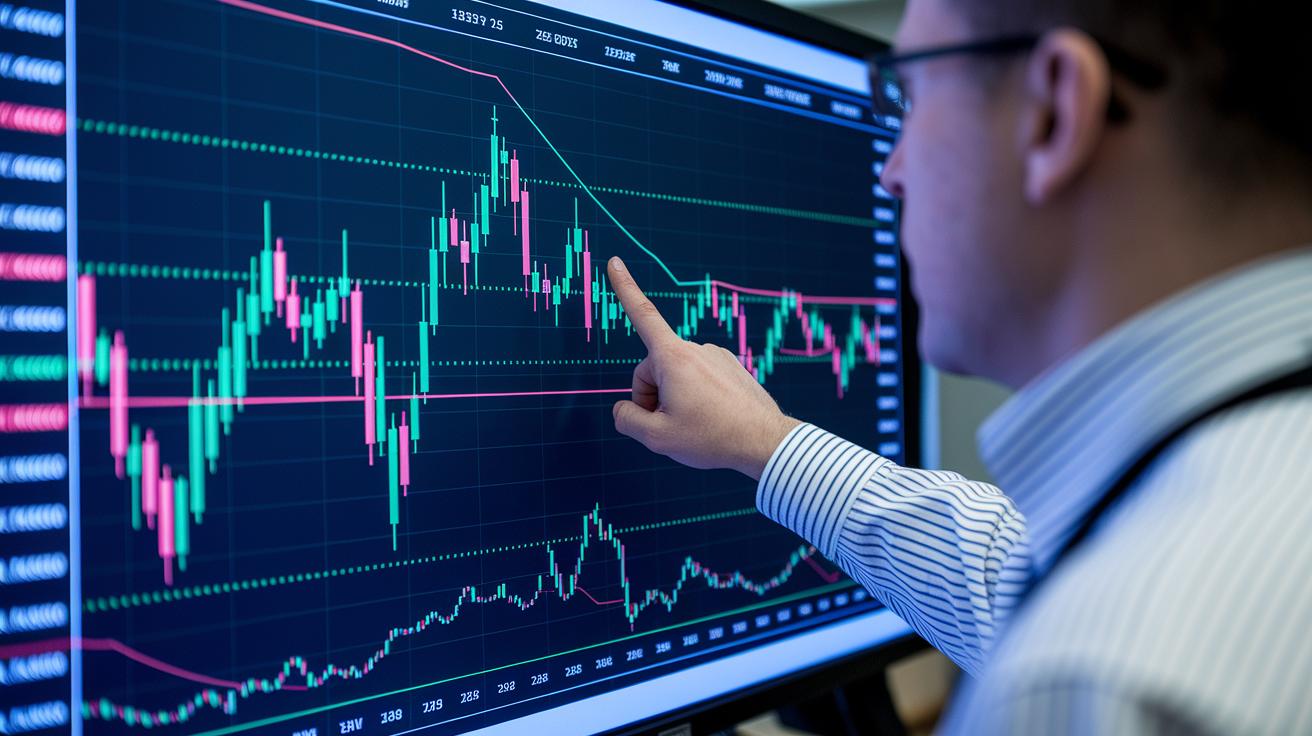
Fibonacci trading uses a famous number series (0, 1, 1, 2, 3, 5, 8…) to create key ratios that help you pick smart spots to jump into or exit a trade. These special percentages, 23.6%, 38.2%, 50%, and 61.8%, show levels where the price might slow down or even turn around. It’s a favorite trick whether you’re trading forex, stocks, commodities, or cryptocurrencies (digital money assets). The idea is simple: mark a swing high and a swing low, then draw your retracement zones. For example, if a stock pulls back to the 61.8% level after a strong rise, that could be your cue to buy.
Let’s break it down step by step. First, find the most obvious swing high and swing low. Next, draw your Fibonacci retracement lines between these key points. Then, watch how prices react around the 23.6%, 38.2%, 50%, and 61.8% marks. Finally, use extension levels to set realistic profit targets when the trend picks up again.
| Level | Percentage | Use |
|---|---|---|
| Minor Pullback | 23.6% | Early reversal sign |
| Corrective Pullback | 38.2% | Potential entry trigger |
| Balanced Area | 50% | Midpoint support/resistance |
| Strong Move | 61.8% | Major reversal indicator |
Many traders mix these Fibonacci methods with other tools like moving averages (which smooth out the price data) and candlestick patterns (charts that show price trends in a visual way). They even draw on deeper technical analysis ideas to give their signals more weight. This blend helps create a handy roadmap for making smart choices when entering or exiting the market.
Understanding the Fibonacci Sequence and Golden Ratio in Trading

In the early 1400s, Leonardo Pisano introduced a special sequence that gave us famous ratios like 23.6%, 38.2%, and 61.8%. These numbers often act as signposts, hinting that a market might soon turn. Think of them as stepping stones, each number builds on the last like blocks stacking to form a stable base.
We’ve already talked about how these ratios work as reversal markers on daily or weekly charts. If you’re curious about the nitty-gritty details, check out the earlier section on using Fibonacci trading techniques for a deeper dive.
Historical insights mix with modern trading when traders use these ratios alongside dynamic sequence signal analysis (a method that tracks changes in measurements) to gauge how strong the market is. A trader might even say, "It feels like the price change is echoing a shift in momentum, kind of like watching a ball bounce back after a hard impact."
Implementing Fibonacci Retracement Analysis on Price Charts

First, find the most recent high point and low point on your chart. These spots usually mark where the price might change direction. For example, on an AUD/USD daily chart, look for the highest peak and the deepest dip before the price pulls back. Think of it like a runner reaching the last marker before a downhill dash. This method works for forex, stocks, and crypto, whether you’re looking at longer daily charts or quick intraday setups.
Next, use the Fibonacci retracement tool between your chosen high and low. This tool draws lines at levels like 23.6%, 38.2%, 50%, and 61.8% to show where the price might find support or resistance. These levels are useful on both swing charts and quicker intraday charts. For day traders (for example, see more tips here: https://ontheblockchains.com?p=1088), checking these levels on shorter timeframes can really sharpen your precision.
Here are some easy steps to help tighten up your analysis:
- Pick clear swing highs and lows so you don’t mix up the price moves.
- Look at retracement levels on different timeframes to double-check your signals.
- Pair Fibonacci retracements with other tools like trend lines or candlestick patterns to boost your confidence.
- Try your setups on a demo account before going live.
Sometimes, a EUR/USD 4-hour chart might show the price bouncing off the 38.2% mark – this can be a hint of a good entry point.
Setting Profit Targets with Fibonacci Extension Levels

When a market trend picks up again after a dip, Fibonacci extension levels can be a useful tool to set clear profit targets. First, let the price finish its pullback and watch for signals that the trend is returning. Once you spot a steady push in price, you can draw the extension lines to help forecast where the market might head next. This approach gives you realistic exit points that match the strength of the trend.
Here’s how you can set your extension targets:
- Wait for the price to complete its pullback.
- Confirm that the trend is continuing with clear price signals.
- Plot the Fibonacci extension lines starting from the recent swing low or high.
- Compare these extension levels with the current price action for exit cues.
| Extension Level | Percentage | Description |
|---|---|---|
| Level 1 | 127.2% | Initial target zone for smaller profits |
| Level 2 | 161.8% | Main profit zone indicating strong moves |
| Level 3 | 261.8% | Aggressive target for extended trend moves |
By using these steps and applying the Fibonacci extension levels, you can set data-driven exit points that align with the natural price moves and help balance your risk and reward. It’s a straightforward method that keeps your trading plan grounded in the market’s pulse.
Managing Risk in Fibonacci Trading Strategies

Risk management is really important when you trade with Fibonacci. One simple method is to set a stop-loss just below a key retracement level, like 61.8%, to keep your losses small if the market turns against you. Many smart traders check these retracement signals with extra tools such as RSI (a tool that measures price changes), moving averages, trend lines, and candlestick patterns. Imagine the price drops to 61.8%, then forms a bullish candlestick before rising again. Watching for these clues helps you avoid false breakouts that might lead you astray. And using automated risk controls from tools like algorithmic trading strategies (computer programs designed to trade for you) can cut down on mistakes.
Here are some practical tips to keep your risks in check:
- Place stop-loss orders near important retracement levels to limit losses.
- Double-check price signals with several indicators before taking action.
- Wait for strong confirmation, like a bullish engulfing pattern, to confirm a reversal.
- Adjust your trade size based on market volatility to keep losses manageable.
- Practice with demo accounts until you feel confident enough to trade for real.
Mixing these strategies gives you a sharper edge by combining Fibonacci retracement with classic trading tools. This way, you can manage your risk while balancing potential gains and setbacks. Take your time to practice these techniques and let your trading strategy evolve as you gain more market experience.
Final Words
In the action, we're reminded that using fibonacci trading techniques can bring clarity to market entry and exit. The post walked through the basics of the Fibonacci sequence, retracement levels, extension targets, and key risk management tips. Each step helps you apply real-time market insights for better decision-making.
These strategies work together to build confidence as you test new methods and refine your approach. Keep trying, stay positive, and enjoy the thrill of smart, risk-managed trades.
FAQ
Frequently Asked Questions
What is the Fibonacci Trading book?
The Fibonacci Trading book explains how traders use sequence-based ratios to spot market reversals and set action points using retracement and extension methods on charts.
What are Fibonacci retracement levels?
The Fibonacci retracement levels are derived from the Fibonacci sequence and include key ratios like 23.6%, 38.2%, 50%, and 61.8%, which often indicate potential support or resistance zones.
What is a Fibonacci trading strategy?
A Fibonacci trading strategy uses retracement and extension tools to predict market turns by marking key levels, helping traders decide when to enter or exit a trade.
Where can I find a Fibonacci trading strategy PDF?
A Fibonacci trading strategy PDF provides a detailed guide with step-by-step instructions on applying retracement and extension techniques for effective market analysis.
What does the Fibonacci retracement golden ratio mean?
The Fibonacci retracement golden ratio, usually the 61.8% level, acts as a major marker where price pullbacks often find support or resistance during market corrections.
How is the Fibonacci retracement strategy applied for intraday trading?
The Fibonacci retracement strategy for intraday trading involves drawing retracement lines on short-term charts to pinpoint quick reversal points, helping traders time their entry and exit positions.
Is Fibonacci trading suitable for beginners?
Fibonacci trading offers a simple framework that even beginners can learn, as it uses clear ratio levels from the market’s natural moves to highlight likely areas for reversals and profit targets.
How can I use the Fibonacci trading strategy on TradingView?
On TradingView, you can access built-in Fibonacci tools to easily draw retracement lines on your price charts, assisting in identifying potential market turning points for informed trades.
Is Fibonacci effective in trading?
Fibonacci methods are effective in trading when they highlight potential reversal levels and are used alongside other technical indicators, boosting the accuracy of entry and exit decisions.
What is the golden rule of Fibonacci retracement?
The golden rule of Fibonacci retracement is to use clearly identified swing highs and lows to draw the retracement levels where prices are likely to reverse, guiding trading decisions.
What is the 1 minute trading strategy?
The 1 minute trading strategy focuses on capturing quick price movements on very short-term charts, often using rapid retracement levels and technical signals to time fast trades.
Can you use Fibonacci for day trading?
Fibonacci tools can be used in day trading by applying retracement levels to intraday charts, helping traders identify short-term reversal points and optimize their entry and exit timing.