Have you ever thought about whether your favorite artist really benefits from the music they make? Blockchain (a digital ledger that records transactions) might be the key. Every time a song is played or bought, this technology tracks it securely, ensuring everything stays clear and true.
With this system, payments can be sent out automatically, so artists get what they deserve without any extra middlemen taking a cut. Think of it like moving from old-school methods to smart contracts (automated agreements using blockchain) and live records. This change could help make the music industry fairer and more transparent for everyone involved.
Blockchain in Music Industry: Transforming Digital Rights and Royalties

Blockchain technology is changing how music works today. It tracks every stream and download in real time, so all transactions are clear to everyone. Each action is written on a digital ledger that can’t be altered, which helps ensure artists get exactly what they’re owed. With this secure, decentralized method, musicians don’t have to rely on middlemen, giving them more control over their rights and earnings. Distributed streaming tech is sparking a true audio revolution.
Smart contracts make a huge difference. They automatically carry out licensing agreements and send royalty payments when the right conditions are met. This cuts down on delays and mistakes, ensuring money flows correctly. Projects like Imogen Heap’s Mycelia Creative Passport and Björk’s cryptocurrency album release show how blockchain can boost digital rights management and improve payment tracking.
- Clear visibility of every transaction
- Automated royalty payments using smart contracts
- Better control over licensing and revenue sharing
Blockchain keeps pushing the music world forward by offering fast, efficient payment methods and secure digital rights tools. New trends like fractional song ownership and token-based revenue models mean that both fans and artists share in the financial benefits. With the industry earning $26.2 billion in 2022, these transparent payment systems are setting a fresh standard for fairness and innovation in artist royalties.
Blockchain Fundamentals for the Music Industry

Blockchain is a secure digital ledger that confirms a track’s authenticity and makes agreements automatic through smart contracts (self-executing coded rules). It replaces old manual methods with simple digital processes, so licenses and royalty payments happen just as they should. For example, one record label used blockchain to set up digital contracts that paid artists automatically, cutting out delays.
Thanks to a built-in consensus process, blockchain creates records that can't be changed. This shared ledger checks that songs are real and even supports new testing projects. Some companies are now experimenting with systems where smart contracts adjust royalty payments on streaming platforms in real time, which helps reduce disputes and smooth out revenue flow.
| Blockchain Component | Role |
|---|---|
| Smart Contracts | Automation of royalty payments |
| Immutable Ledger | Secure record keeping |
| Digital Authentication | Verification of music assets |
Building on these simple ideas, real-life examples show how blockchain is reshaping music rights management. For instance, a major streaming platform tried a blockchain system that updated licensing terms whenever an artist’s songs got a surge in plays. This setup kept payment details precise and boosted trust among musicians. By moving beyond basic verification, blockchain now supports real-time royalty management and clear copyright protection across many platforms.
Blockchain and Music Industry: Real-World Applications
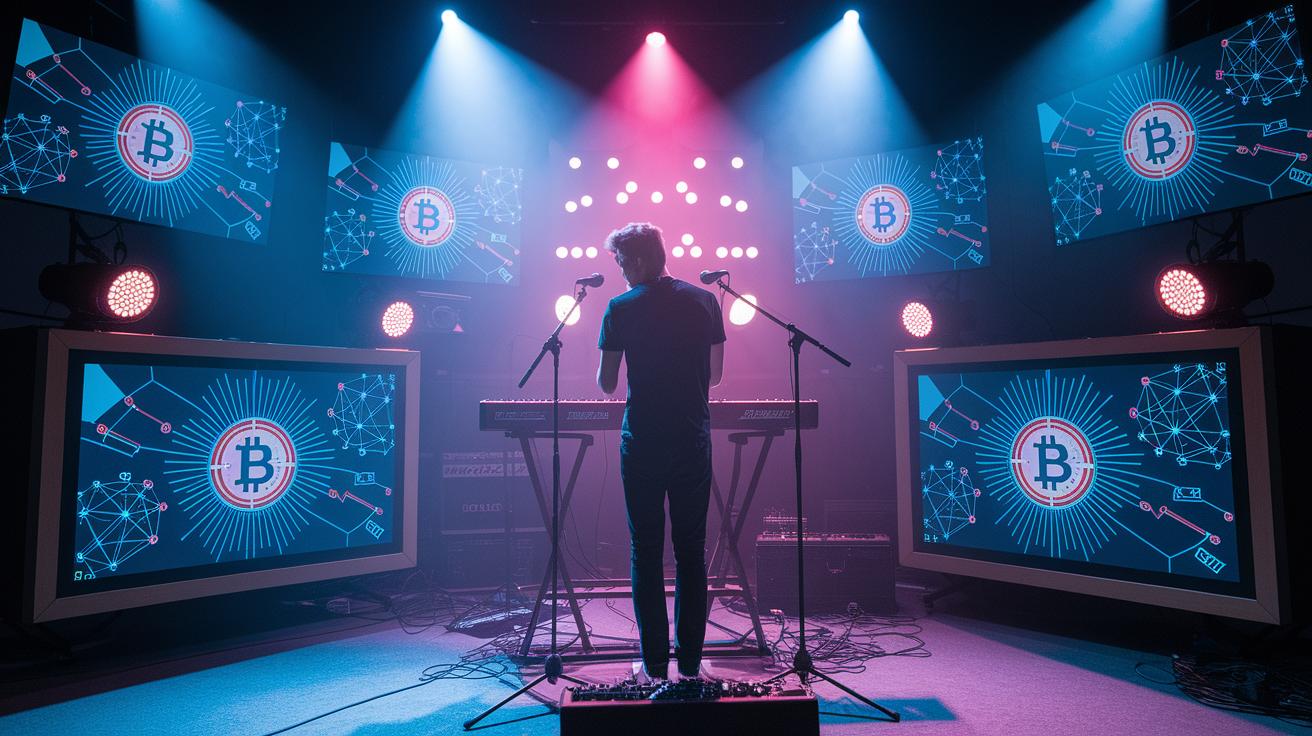
Blockchain lets artists take control of sharing and selling their music. With decentralized licensing platforms (digital systems that let musicians trade directly), they can skip the middlemen and set their own prices. When someone buys a license, payments go through instantly and clearly. For example, Imogen Heap’s Mycelia Creative Passport, Björk’s cryptocurrency-based album release, and eMusic’s model where artists keep up to 90% of sales all show how blockchain helps manage music rights and royalty payments in real life.
- Direct Licensing and Royalties
- Fractional Song Ownership Models
- Transparent Ticket Sales via NFTs
- Enhanced Fan Engagement through Token Investments
This system even allows artists to share parts of their songs, building small economies where every bit counts. Fans can become more than just listeners by buying music tokens (digital coins that can increase in value), helping to blur the line between supporter and investor. Blockchain makes it simple for musicians to start tokenized music labels and use NFT-powered ticket sales, which can make live events both exciting and secure. Decentralized publishing platforms also let creators keep full control of their work while connecting directly with their audiences. And some innovative projects use community votes in token-curated content systems (where fans help decide which projects get support), signaling a move toward a more interactive music community. This trend gives both artists and fans a real stake in the music’s success, reshaping old roles and creating a fairer, more lively industry.
Blockchain and Music Industry: Weighing Benefits and Challenges

Blockchain is making it easier for artists to keep track of their royalties and handle licensing and earnings directly. We’ve seen before how real-time royalty tracking and simple payment systems can work wonders. Imagine having a clear view of every transaction, almost like checking an open ledger you know you can trust.
But there are still some hurdles to overcome. Incorporating blockchain into music production isn’t without its challenges. Small businesses might face steep setup costs, rules can vary widely from one region to another, and there are technical issues like scalability and energy use that need careful attention.
In short, while transparency and greater control for artists are big pluses, technical and legal obstacles still make full adoption a tricky road to travel.
Future Trends in Blockchain Transforming the Music Industry

Blockchain is shaking up how music gets made and shared. Thanks to smart contracts (self-running agreements), artists can now handle royalties and rights more smoothly on a transparent platform. Did you know that before these smart contracts, many artists had to rely on hidden middlemen, which often meant they didn’t get paid fairly?
New onchain tools and creative funding ideas are sparking fresh ways to create music. Imagine artists teaming up through a digital voting system where fans make small investments in a new track, and their feedback helps shape the final sound. Think of a group project run entirely on a platform that uses tokens, where every contribution makes a difference.
| Trend | Description |
|---|---|
| Smart Contract Evolution | Smarter automation in handling royalties and rights |
| Decentralized Publishing | Direct models connecting artists with fans |
| Fan-Driven Token Economies | Systems where fans invest and earn through music tokens |
These innovations are guiding music toward a fresh, fair model. Artists gain more control over their creative work, while fans enjoy special access and a chance to be part of the process. It's a new era that reshapes how music is produced and shared.
Final Words
In the action of merging secure digital rights management with smart contract-enabled payments, this article shed light on how blockchain transforms digital rights and royalties. We explored secure record keeping, real-world examples of transparent licensing, and the balance between benefits and challenges.
Emerging trends point to stronger artist independence and engaging fan experiences. Blockchain and music industry innovation offer fresh outlooks for enhanced transparency and efficiency. Positive changes are ahead as technology empowers both creators and investors alike.
FAQ
Q: How does blockchain affect the music industry?
A: The question on how blockchain affects the music industry shows it improves transparency in tracking streams and automates royalty payments, giving artists more control and providing fair revenue distribution to both creators and fans.
Q: What is blockchain?
A: The question asking “What is blockchain” explains that blockchain is a secure digital ledger that records transactions in unchangeable blocks, using smart contracts to enforce agreements automatically.
Q: How have blockchain trends in the music industry evolved in 2021 and 2022, and what does recent news highlight?
A: The inquiry about recent blockchain trends in music indicates that updates demonstrate improved digital rights management and faster, automated royalty payments, reshaping the way artists and labels manage content and revenue.
Q: What is blockchain music distribution?
A: The question on blockchain music distribution signifies that blockchain allows artists to offer their work directly, reducing intermediaries, and ensuring transparent, secure payment and ownership records.
Q: What is a blockchain music streaming platform?
A: The inquiry about blockchain music streaming platforms shows they use decentralized networks to track plays and payments, delivering secure streaming experiences and better revenue shares for artists.
Q: What is Audius?
A: The question regarding Audius clarifies that Audius is a blockchain-based music streaming platform where artists share their music directly with fans, enjoying instant royalty payments and enhanced content control.
Q: How does blockchain benefit artists?
A: The inquiry on blockchain for artists reveals that it provides clear, real-time royalty distribution, immediate payments through smart contracts, and improved control over licensing and digital rights management.
Q: Is Spotify using blockchain?
A: The question about Spotify’s use of blockchain explains that while Spotify has shown interest, it has not fully integrated blockchain technology into its platform yet, though it explores ways to improve digital rights processes.
Q: Which industry uses blockchain the most?
A: The question asking which industry uses blockchain the most indicates that the finance sector leads due to its need for secure, real-time transaction tracking, while music, supply chain, and healthcare also benefit significantly.
Q: How can blockchain help solve challenges in the music industry’s AI problem?
A: The inquiry on blockchain addressing the music industry’s AI problem suggests that blockchain secures copyrights and verifies creative input, automating rights management and ensuring proper credit and payment for content creators.