Ever wonder how trading really works behind the scenes? Markets bring folks together to swap assets and share risks, kind of like early merchants did when they traded goods face-to-face.
Today, buyers, sellers, banks, and investors team up to keep money flowing smoothly. In this article, we dive into the key ideas and roles that make financial markets and institutions so important to our economy.
Financial Markets and Institutions: Thriving Fundamentals
Financial markets are the places where buyers and sellers come together to trade assets. They offer a simple space for moving money and sharing risks. Did you know that before the first stock exchanges emerged, merchants traded goods face-to-face? That early trading laid the foundation for the efficient markets we enjoy today. With technology and changing customer needs, these markets keep evolving.
At the heart of these systems are three main types of markets: equity, debt, and money markets. Debt markets, for example, let companies borrow money to build big projects, while money markets help manage everyday cash needs. Each type has its own way of working, making sure funds flow smoothly and businesses run without a hitch.
Banks also play a big role in this world. They connect savers with borrowers and help move money around safely. Their everyday work includes checking risks and making sure money transfers are steady and reliable. In other words, banks keep the system running like a well-oiled machine.
Then there are retail and institutional investors, along with brokers and dealers, who shape the market with their choices. Their decisions, driven by the latest trends and shifts in market vibes, continuously redefine how our financial system supports modern economies.
Financial Market Structures and Key Participants
Financial markets come in two flavors. First, there's the primary market where companies offer their stocks or bonds for the very first time, gathering money for growth. Then, you have the secondary market, where everyday investors buy and sell these products after they’ve been issued. Imagine a company selling bonds, and later on, seeing those bonds traded like collectible cards among friends.
Trading happens mainly in two ways. One is exchange-based trading, which takes place on big stock markets with clear rules and order. The other is over-the-counter (OTC) trading, where buyers and sellers deal directly with each other without a central marketplace. Understanding this difference is key because it helps us see how quickly assets can be turned into cash, and it offers clues about market trends through price and volume tracking.
Key market players include exchanges that set up the trading stage, brokers who help connect buyers and sellers, and dealers who trade on their own account. Retail investors bring in personal strategies, while institutional investors manage large amounts of money. Everyone is always watching how stocks and bonds move. One trader once said, "The market’s beat feels like a live performance, where every participant adds their note." Every participant and method helps create a system that can shift smoothly with the market’s changing rhythm.
At its core, market activity thrives on strong connections and clear rules, keeping the system resilient no matter how the tide shifts.
Institutional Roles in Banking and Investment
Commercial banks are the cornerstone of our financial world. They handle deposits, give out loans, and manage everyday money matters. They connect savers to borrowers, which helps local businesses grow. Picture a bank quickly setting up a credit line for a small business eager to expand. It’s like a fast track for fresh ideas.
Investment banks work in a different way. They help companies with big moves like going public or issuing bonds. They look at the risks and plan how to sell securities. A trader once said, "Underwriting is like setting the stage for a blockbuster debut." This shows how these banks balance opportunity with caution.
Asset managers pool money from individuals and institutions to invest smartly. They use simple methods (ways to spread out investments to reduce risk) to build portfolios that match client goals. Their careful planning keeps our markets steady and helps them grow over time.
Insurance companies are important, too. They not only protect us when things get tough but also invest the premiums they collect in various assets. This helps keep money moving in the market. Their long-term view on investments means more consistent returns, even when times are unpredictable.
| Institution Type | Core Functions | Impact on Capital |
|---|---|---|
| Commercial Banks | Deposits, Loans, Payment Systems | Keep money flowing day-to-day |
| Investment Banks | Underwriting, Capital Raising | Fuel market growth |
| Asset Managers | Portfolio Management, Asset Allocation | Boost long-term growth |
| Insurance Firms | Risk Management, Premium Investments | Enhance market liquidity |
Core Financial Instruments in Markets and Institutions
Equities and bonds are the key tools big institutions rely on. Equities let you own a piece of a company, while bonds are like loans that pay you interest regularly. Knowing asset pricing theories (simple ways to explain how assets get their value through risk and return) is vital for setting proper prices. I recall one experienced analyst saying, "Pricing is magic when numbers turn into real opportunities."
Then come derivatives like options, futures, and swaps, which build on these ideas. They help institutions manage risk smartly. Companies use these tools either to protect against sudden market changes or to bet on price movements. Here, understanding portfolio management techniques (ways to balance risk and reward by mixing different assets) really comes into play. A trader once mentioned, "When you deeply understand swaps and options, you see market rhythms like a well-tuned instrument."
Next, there are securitized products. These combine loans or other assets into packages that can be traded, spreading risk, boosting liquidity, and fostering growth. Institutions look at credit market behavior (the pattern of how credit spreads and rates move) to judge the risks in these packages. Mixing sound portfolio management with ideas from derivatives and asset pricing helps market players make well-informed decisions.
In real terms, blending simple financial tools with modern analysis gives you the adaptability to meet both short-term and long-term goals, while managing risk and exploring opportunities.
Regulatory Frameworks for Financial Markets and Institutions
Rules like Dodd-Frank and MiFID II serve as the backbone for the compliance systems everyone in the market relies on. Basel III, for example, reminds banks to keep extra capital reserves to weather unexpected market shocks. As one analyst put it, "Clear rules pave the way for trust in every transaction."
Central banks play a key role by managing money flow and setting interest rates, which affect everything from everyday loans to complex securities trading. Their decisions send ripples through the economy, and many institutions keep a close eye on these shifts to update their strategies in real time.
Modern reporting methods have boosted these efforts even further. Many firms are now using blockchain (a secure digital ledger that records transactions) and other smart technologies to help meet regulatory standards (https://cipherreview.com?p=2592). These innovations shine a light on compliance processes, making it easier for institutions to follow the rules.
Regulators and central banks team up to build trust through clear guidelines. Together, they ensure that institutions operate safely within set boundaries. Watching how Basel III influences day-to-day banking operations reminds us why strong capital standards matter so much. When banks and investors follow these guidelines, the market stays trustworthy and ready for growth.
Clear, consistently updated rules help boost investor confidence and market stability. Regular tweaks to compliance systems ensure they keep pace with rapid economic changes and evolving central bank roles, keeping the whole system resilient.
Risk Management and Stability in Financial Markets and Institutions

Risk management is the heart of a strong financial system. A popular example is Value at Risk (VaR), a method that estimates the worst loss you might face over a set time (imagine planning for a rainy day). One risk analyst once said, "Using VaR helps us spot potential losses before they hit us hard."
Stress testing plays a similar role. Banks run these tests by simulating tough financial scenarios to check if their extra cash buffers stand up to sudden shocks. It’s like checking if your umbrella is sturdy before a storm.
Evaluating systematic risk means looking at big market twists that could spark a domino effect. Experts study overall market ups and downs and economic uncertainties. As one evaluator put it, "Reading stress test results is like checking the weather forecast before a financial storm." This process shows institutions how connected risks might build up into bigger issues.
Another key part is looking at liquidity risk (how easily your money can be turned into cash) and credit risk (the chance that borrowers might not pay back their loans). Banks keep enough liquid assets so they can handle surprise withdrawals, and they use credit risk models to manage lending. They focus on key measures like:
| Measure | Description |
|---|---|
| Regular Bank Stress Testing | Routine checks to simulate tough conditions |
| Monitoring Liquidity Ratios | Keeping track of cash availability |
| Adjusting Credit Exposure Limits | Changing lending boundaries as needed |
This blend of proven techniques and proactive checks keeps markets steady. By staying alert to potential pitfalls, institutions can quickly change their strategies, ensuring smooth operations even when market conditions get rough.
Financial Market Crises: Institutional Responses and Lessons
The 2008 global crisis shook our financial systems and tested them hard. Banks and regulators had to act fast to steady the markets. They took a close look at risky investments and boosted their stress tests. One analyst said it felt like walking a narrow path in a heavy storm, where every step counts.
In 1997, during the Asian crisis, institutions in the region worked hard to calm wild movements of money across borders. They quickly added emergency funds and improved oversight, which led to stronger financial practices. Global finance was becoming more connected, so lessons learned in one area quickly spread to others. Some Asian banks improved their risk models after noticing familiar warning signs in their stability measures. A risk manager remarked that learning from past mistakes is the best way to avoid making them again.
Looking back at these crises gives us important lessons for today. Changes in rules after 2008 helped create better guidelines to manage liquidity risks. These new rules not only steadied the markets during tough times but also built trust among traders. Studies show that clear, calm communication during uncertain times can ease fears and slow down frantic money movements.
| Crisis | Key Features | Lessons Learned |
|---|---|---|
| 2008 Global Crisis | Severe shortage of funds and frozen markets | Stronger buffers and more stress tests |
| 1997 Asian Crisis | Rapid outflow of money and local money stress | Better risk models and crisis plans |
These past events still guide how institutions get ready for future market challenges.
Future Trends in Financial Markets and Institutional Innovation
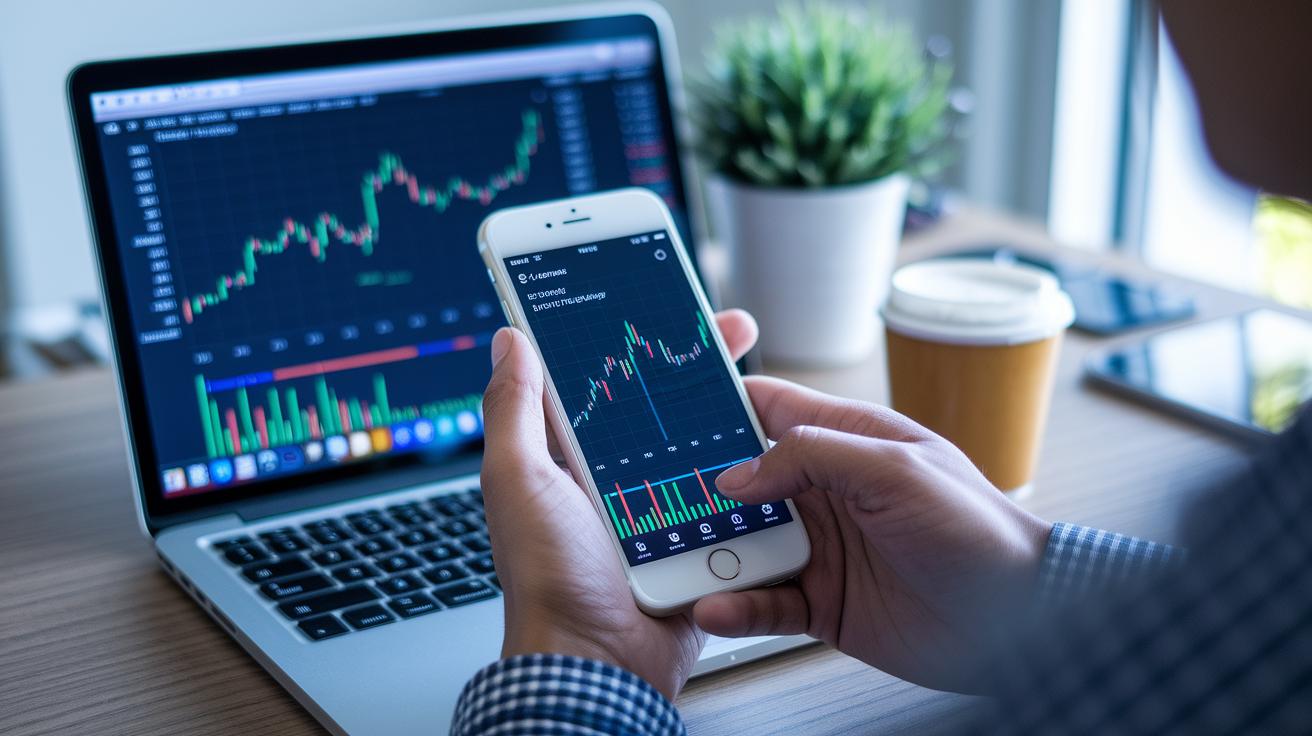
Fintech trends are changing the way money moves today. You can now handle your accounts and investments with just a tap on your phone. Imagine an app that buzzes with market updates in seconds, it makes global finance feel as close as your neighborhood shop.
Then there’s decentralized finance (DeFi). This is where traditional banking is rethought using digital tools. Picture lending or borrowing without a bank in the middle. One trader said using DeFi is like trusting a clear, crowd-run network instead of relying on one single institution. It’s about offering simple, transparent financial services.
Digital banking is stepping up too. Even old-school banks are adding smart tech so you can control your money in real time. Think of it like online shopping, you get convenience with added security.
All of these trends mix innovation with everyday transactions. With fresh fintech tools, a new twist on DeFi, and evolving digital banking, finance is becoming more accessible and agile than ever.
- Fintech innovation trends
- Decentralized finance overview
- Digital banking evolution
Final Words
In the action, we explored financial markets and institutions by breaking down essential concepts from market structures to regulatory frameworks. We discussed core instruments and risk management strategies and reviewed how past crises shaped today’s approaches. Practical examples and clear insights tied each section together. The article shows how modern tools, like blockchain (a digital ledger that records transactions securely), are adding a fresh twist to trading. Keep experimenting with these ideas, and trust that your understanding will grow along with your trading strategies.
FAQ
What are financial markets and institutions?
Financial markets and institutions refer to systems and organizations, like banks and exchanges, that connect savers with borrowers. They help allocate capital to support economic growth.
What are the 4 types of financial markets?
The four types of financial markets include equity (where stocks trade), debt (for bonds), money markets (dealing with short-term debt), and derivative markets (trading contracts based on assets).
What are the major types of financial institutions?
Major financial institutions include commercial banks, investment banks, insurance companies, asset managers, broker-dealers, credit unions, and government-sponsored bodies, each playing a unique role in capital flow.
How can I access study materials on financial markets and institutions?
Study materials like textbooks, PDFs, and lecture notes offer in-depth insights. Trusted resources from established publishers such as Pearson and Mishkin outline market structure, risk, and regulation.
What does “Mercados E Instituciones Financieros” mean?
“Mercados E Instituciones Financieros” is Spanish for financial markets and institutions. It covers the systems that manage capital, connecting investors with firms needing funds.
What is Principles of Corporate Finance 2nd Edition?
Principles of Corporate Finance 2nd Edition is a textbook that breaks down core corporate finance ideas like capital budgeting, risk, and valuation in clear, student-friendly language.