Ever thought you could learn trading without putting your own money at risk? Paper trading lets you practice buying and selling stocks using pretend money, so you get comfortable with the moves without any real pressure.
It’s a bit like a dress rehearsal where you try out your trading skills before the big show. This simple tool helps you understand different order types (like instructions for buying or selling stocks), sharpen your trading strategies, and build up the confidence needed for real market action.
Curious to know more? Keep reading to see why paper trading could be the smartest way to kickstart your trading journey.
Paper Trading Explained: Definition and Core Principles

Paper trading is like a dress rehearsal for real investing. You use fake money to practice buying and selling stocks, so there’s no risk of losing real cash. It’s a bit like scribbling down ideas during a live game, just to see how things might play out.
With a virtual account, you learn different types of orders and how to set up trades. For example, you might note, "Bought XYZ stock at $50 because of rising volume – just testing out my trend-spotting skills." This practice makes it feel like you’re in the real market, watching your choices shift as live data flows in.
The best part? You can try new strategies without worrying about real money. You watch the market tick along in real time and adjust your moves, all in a safe space. It’s like tracking a pretend portfolio where every tweak helps you learn, but mistakes won’t hurt you financially.
Keep in mind, though, that paper trading doesn’t capture the real stress of trading with your own money. The thrill and pressure of real stakes are missing here. Still, it’s a smart way to build your trading skills and learn how to navigate the markets with confidence.
Simulated Market Practice: Setting Up Your Demo Trading Account
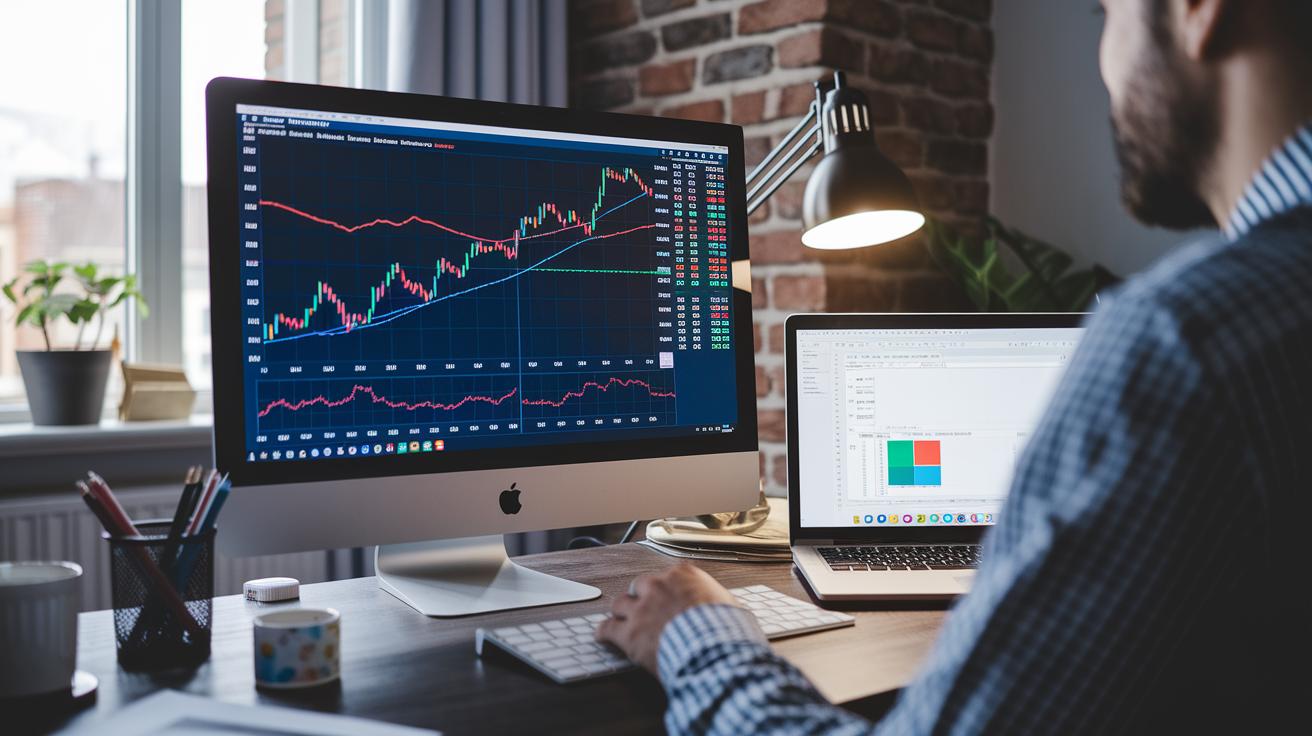
Have you ever wanted to dive into a busy trading floor without any risk? Many brokerages let you open a demo account loaded with virtual funds, from about $10,000 to $100,000. In just a few minutes, you choose the demo option, pick your virtual cash amount, and provide some simple details. It’s like stepping onto a practice field before the big game. You might even set your balance at $25,000 to test your strategy.
If you prefer trading on a computer, platforms like TradingView and thinkorswim include built-in paper trading modules. You can click on a chart, adjust your order, and see your simulated trade update in real time. Imagine placing a trade right on a chart with several technical analysis indicators (tools that help you spot market trends) lighting up the screen, a clear, hands-on look at market movements.
Mobile apps like Webull and eToro offer the same benefits on the go. With real-time market data and endless simulated trades, you can experiment wherever you are, whether you’re riding the bus or relaxing at home.
Starting is really straightforward:
| Step | What to Do |
|---|---|
| 1 | Select the demo account option |
| 2 | Pick your preferred amount of virtual cash |
| 3 | Verify some basic details |
| 4 | Start trading on your choice of desktop or mobile platform |
And there’s more. These platforms pack advanced tools such as over 100 technical indicators, various drawing tools, and different chart styles. Picture creating a demo trade with the confidence of a seasoned pro, only without the risk. It’s a secure and fun way to build your skills and get familiar with the markets.
Benefits of Virtual Investing with Paper Trading

Paper trading lets you take a break from real trading stress. It creates a calm space where you can practice making steady decisions without risking your money. Imagine trying a new stop-loss setting with a tech stock at $100 and simply watching the price move without worry.
Top traders say paper trading is a smart way to fine-tune your order timing and strategies. One trader even mentioned, "Practicing without fear helped me build consistency, and I learned to trust my judgment under pressure." This method not only refines your technical skills but also boosts your confidence by letting you feel the market pulse risk-free.
Many users find that this controlled practice clears up their strategy. They often note, "I trialed a different order execution technique, observed the market’s reaction, and grew more confident for future live trades."
Limitations and Drawbacks of Simulated Trading
Paper trading is a handy way to test out trading ideas without the risk of using real money. It lets you experiment with strategies in a calm setup. But it often leaves out key details that you’ll face when money is actually on the line. In a simulation, you might miss things like slippage (small price differences that happen when a trade is filled), the bid-ask spread (the difference between the price buyers are willing to pay and what sellers want), and margin calls (requests to add more funds if your account balance drops). For instance, you could see a perfect price pop up in a simulation, yet in live trading, that price might shift in an instant.
Virtual trading also doesn’t bring along the nervous energy you feel when real money is at stake. It’s much like practicing for a big game without the pressure of an actual match, the decisions you make in a relaxed, simulated setting can be very different from the choices you’d face in real time.
Moreover, paper trading often ignores costs such as transaction fees and taxes. Without these real-world expenses, your simulated profits and losses might look better than they truly are, giving you a false sense of security about your trading methods.
Here are a few points to keep in mind:
- Simulated trades typically skip important financial costs.
- They don’t capture the stress and emotions that come from trading with actual money.
- Prices in simulations may look ideal, but real market orders are subject to quick changes.
While paper trading is a smart way to get started and practice, remember that its results may not match what happens when you’re dealing with real cash.
Popular Platforms for Practice Stock Exchanges

Diving into virtual trading feels a bit like entering a real market without any of the risks. There are plenty of demo options on the market that match different trading styles. TradingView lets you play around with charts and custom studies on both your web browser and desktop. It’s a great choice if you like a strong visual approach to trading.
TD Ameritrade’s thinkorswim has a feature called paperMoney (a tool that tracks your virtual cash and shows simulated profits and losses in real time). It mimics the rush of live trading without any real financial pressure.
Many mobile traders lean toward Webull because its simulator comes with a $1,000,000 virtual balance and live U.S. market feeds. It really makes you feel like you’re trading during the hottest market hours.
E*TRADE provides a demo platform that guides you through placing orders, analyzing the market, and checking your performance. Its clear, step-by-step setup is perfect for those just starting out.
If you enjoy trading as part of a community, eToro offers a practice portfolio. You can try out social and copy trading strategies in both crypto (digital currency) and stocks, and learn by watching how others trade.
Zerodha’s Varsity focuses on structured mock trading sessions for the Indian indices, which is ideal if you like guided practice sessions.
Plus, Fidelity’s mobile app features tutorial-driven demo trades that help reinforce trading strategies through hands-on practice, even though it doesn’t appear in the comparison table below.
| Platform | Demo Type | Key Features |
|---|---|---|
| TradingView | Web/Desktop | Chart trading, custom studies |
| thinkorswim | Desktop | paperMoney, real-time P&L |
| Webull | Mobile/Web | $1,000,000 virtual balance, live feeds |
| E*TRADE | Web | Order walkthrough, performance reports |
| eToro | Web/Mobile | Practice portfolio, social trading |
| Zerodha Varsity | Web | Structured mock sessions |
what is paper trading: A Smart Practice Tool

Paper trading is like a practice game where you can test market moves without using real money. It helps you explore different trading strategies and get familiar with various order types and technical tools (for example, tools like stop-loss orders that help manage risk). With clear goals and careful tracking, these simulated trades can boost your skills and build your confidence. Treat each mock trade as if it were real, it's all part of learning important techniques and risk control.
Here are six smart practices to get the most out of your paper trading:
- Set clear, measurable goals. For instance, aim for a 60% win rate, decide on a risk-reward ratio for each trade, and set a maximum daily loss you won’t go beyond.
- Keep a detailed trading journal. Write down the time, the instruments you traded, why you made each decision, and what happened after. This habit helps you learn from your wins and losses.
- Backtest your strategies. Look at historical data and use technical indicators (simple tools that show market trends) to see how your ideas might work before trying them live.
- Use virtual stop-loss and take-profit orders. This means setting levels in your simulation that automatically stop losses or lock in gains, so you practice good risk management.
- Review your simulation reports weekly. Check for patterns and adjust your position sizes or tactics as needed.
- Treat mock trades as seriously as real ones. Acting like you’re trading real cash builds discipline and prepares you for the real trading experience.
Following these tips lets you learn from simulated mistakes and improve your market sense. Each step helps you build a solid foundation for when you begin trading with real money.
Transitioning from Paper Trading to Live Markets

When you feel ready to move on from simulation, start trading with a tiny amount of real money. Try to mirror what you practiced by making small trades that feel similar to your demo moves. This way, you slowly step into the real market without a big shock.
As you gain confidence with your practice wins, consider moving a little of your virtual gains into real money. Think of it like adding a small weight during training so you build up steadily. Remember, live trading comes with extra details like fees, margin rules, and tax issues that your simulation might not show.
Before jumping in fully, set up a clear plan for how much money you risk per trade and how you will handle losses. For example, you might decide on stop-loss points that automatically sell if the market moves against you. This plan helps keep surprises at bay.
Lastly, know that trading with real money brings new feelings like fear and excitement. Treat your early trades as more chances to learn than as big bets. Over time, a careful, steady approach will help you move smoothly from paper trading to live markets.
Key Terms and Performance Metrics in Paper Trading
Paper trading is like a practice run, so knowing the right terms can really help you feel confident about testing your strategies. Your virtual P&L is like a pretend balance sheet (profit and loss tracker) that shows how well your sample trades are doing. Win rate is simply the percent of trades that end in profit, while drawdown tells you the biggest dip your account experiences. The risk-reward ratio shows how much profit you aim to earn compared to how much you are putting at risk. Slippage is that small gap between the price you expected and the price you actually get, and the bid-ask spread is the space between what buyers are willing to pay and what sellers ask for. For instance, if your virtual P&L slowly rises while your win rate stays at 60%, that might be a clue that your strategy is on the right track.
Other important numbers come into play as well. ROI (return on investment, or simply how much profit you make relative to your cost) and the Sharpe ratio (a basic tool to judge how well your returns compensate for the risks taken) offer more insight into how effective your strategy really is. Maximum drawdown shows you the worst part of your trading journey, and portfolio simulation tools help you see where your money is spread out by showing asset allocation and sector breakdowns. These details can really guide you in fine-tuning your trading approach.
Final Words
In the action, we covered the basics of paper trading (a simulated way to practice investing) and how to set up a demo trading account on desktop and mobile interfaces.
We looked at the benefits of virtual investing, the limitations, and the best practices that can boost your skills. We also touched on transitioning to live markets while learning key trading metrics.
Thinking about what is paper trading can spark a fresh approach to achieving confidence and success in your financial strategies. Enjoy refining your trading skills!
FAQ
What is paper trading on Webull?
Paper trading on Webull means using a simulation mode where you trade with virtual funds. It mimics real market conditions with live data, so you can practice strategies without financial risk.
How does paper trading work?
Paper trading works by letting traders execute simulated trades using fake money. It replicates market conditions, allowing you to test strategies and learn platform features, all without risking real cash.
Can you make real money from paper trading?
Paper trading uses virtual funds, so you can’t earn real money from it. Instead, it builds the skills and confidence needed to successfully trade with actual capital later on.
Is paper trading good for beginners?
Paper trading is great for beginners because it offers risk-free practice. It helps you learn order types, test trading strategies, and understand market movements with no threat to your real money.
How do I start paper trading?
Starting paper trading is simple. You sign up for a demo account on platforms like TradingView, Thinkorswim, or Webull, choose the paper trading option, and begin practicing with virtual funds.
What are the best paper trading apps and platforms?
The best paper trading apps and platforms include Webull, Thinkorswim, and TradingView. They offer realistic simulations, real-time market data, and user-friendly tools for testing various trading strategies.
What is Thinkorswim paper trading?
Thinkorswim paper trading, known as paperMoney, provides a simulated trading environment using virtual cash. It helps you practice placing orders and managing trades in conditions that closely mirror real-life markets.
What is a paper trading account?
A paper trading account is a demo account loaded with virtual money. It lets you practice trade executions and test market strategies safely without risking any actual funds.
What is a paper trading simulator?
A paper trading simulator replicates live market conditions with virtual funds. It allows you to test and refine your trading approach, making it a valuable tool for practicing risk-free trades.
How does TradingView support paper trading?
TradingView supports paper trading through an integrated simulation module. This feature lets you place trades on live charts with virtual funds, offering an effective way to test strategies without real risk.
How do platforms like Interactive Brokers, Investopedia, and Binance relate to paper trading?
Interactive Brokers may offer demo accounts, Investopedia provides in-depth guides on paper trading, and Binance’s testnet lets you practice crypto trading. Each supports learning through risk-free, simulated trading environments.